
Is There Silver in Grandpa’s Coin Jar? A Holiday Guide to Pre-1965 U.S. Coins
November 24, 2026 · Lumo.gold
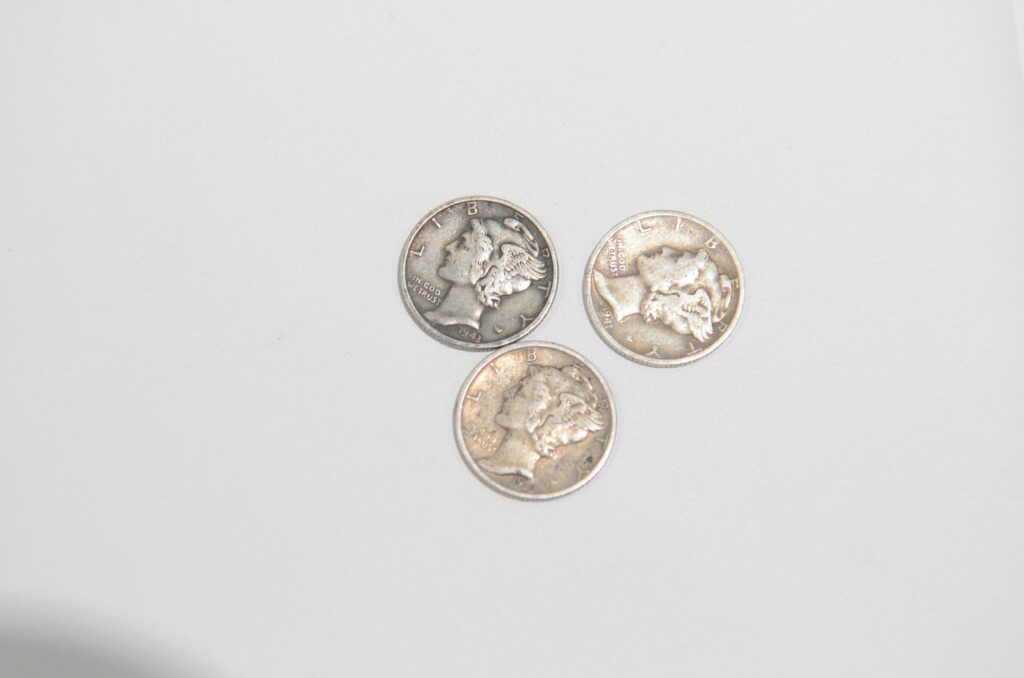
Holiday visits have a way of surfacing old things. Someone pulls a coffee can from the back of a closet, or a relative hands over the coin jar that sat on a dresser for fifty years. Inside, among the pennies and modern quarters, there may be coins that are worth far more than their face value, not because they are rare, but because they are made of silver.
Collectors call them “junk silver,” a slightly unfair name for everyday U.S. coins minted when circulating money still contained precious metal. This guide explains which coins qualify, how to estimate what they are worth, and how to avoid the mistakes that cost families money.
Why the year 1965 matters
For most of American history, dimes, quarters and half dollars were struck in 90 percent silver. That changed with the Coinage Act of 1965, signed by President Lyndon B. Johnson on July 23, 1965. As silver demand from coinage and industry grew and Treasury stocks were projected to run out, the law eliminated silver from dimes and quarters, replacing it with a “clad” sandwich of copper-nickel bonded to a pure copper core.
Half dollars were not dropped to zero right away. The act cut their silver content from 90 percent to 40 percent, and a 1970 law later removed silver from them as well.
The rule of thumb that follows is simple: U.S. dimes, quarters and half dollars dated 1964 or earlier are generally 90 percent silver. Kennedy half dollars dated 1965 through 1970 are 40 percent silver.
Which coins to look for
Sort the jar by denomination and check dates. Using silver-content figures published by Money Metals, based on Mint specifications for new coins:
- Dimes dated 1964 and earlier: about 0.0723 troy ounce of silver each.
- Quarters dated 1964 and earlier: about 0.1808 troy ounce each.
- Half dollars dated 1964 and earlier, including 1964 Kennedy halves: about 0.3617 troy ounce each.
- Kennedy halves dated 1965 to 1970: 40 percent silver, about 0.1479 troy ounce each.
- Wartime nickels, 1942 to 1945: 35 percent silver, about 0.0563 troy ounce each.
- Morgan and Peace silver dollars: about 0.7734 troy ounce each, though these often carry collector interest beyond their silver.
A quick visual tip: look at the edge. Because clad dimes and quarters have a pure copper core, their edges show a copper-colored stripe. Ninety-percent silver coins have a solid silver-colored edge.
How dealers price a pile of silver coins
Dealers often quote 90 percent coins by face value rather than by the coin. Ten pre-1965 dimes, four quarters or two halves all add up to $1 in face value, and each contains roughly the same amount of silver.
Money Metals explains that the Mint specification works out to about 0.7234 troy ounce of silver per $1 face value, while the industry commonly uses 0.715 troy ounce per $1 face to allow for wear after decades in circulation. That 0.715 figure is a convention, not an official standard.
To estimate value at home:
- Add up the face value of your 90 percent coins. For example, 40 old quarters equals $10 face.
- Multiply by 0.715 to estimate silver content: $10 face × 0.715 = 7.15 troy ounces.
- Multiply by the current silver spot price per troy ounce. That is your approximate melt value.
Keep 40 percent halves and war nickels separate. They contain less silver and are priced differently.
Melt value versus collector value
Most worn, common-date silver coins trade near their metal value. AARP’s selling guide makes the same point: pre-1965 dimes, quarters and half dollars sell for melt value, and rare coins often bring no more than their metal value. Check a reference before assuming a premium. AARP points to A Guide Book of United States Coins and to grading services as places to start.
That said, a few coins in any old jar may be worth a closer look:
- Coins in unusually sharp, unworn condition.
- Older silver dollars, which collectors pursue by date and mint mark.
- Any coin already in a holder from a grading service, which should be checked against that service’s records before you rely on the label.
If something stands out, set it aside and show it to a reputable coin dealer before selling it with the rest.
Mistakes to avoid
- Do not polish or clean coins. Leave them as found and let a professional assess them.
- Do not mix silver and clad coins when asking for a quote. Sort first so the buyer is pricing what you actually have.
- Do not spend them. A pre-1965 quarter spent at face value is a quarter’s worth of silver given away.
- Do not rely on a single quote. AARP recommends getting at least three, ideally on the same day.
Turning a family coin jar into a family moment
Sorting old coins can be one of the better ways to spend a slow afternoon during the holidays. Kids can sort by denomination, adults can check dates, and older relatives often have stories about where the coins came from. Write down what you find, keep the coins in labeled envelopes and decide together what to keep and what to sell.
If you do decide to sell, remember the tax side. The IRS taxes net long-term gains on collectibles, a category its Topic 409 page says includes coins, at a maximum 28 percent rate. For inherited coins, IRS Publication 551 says your basis is generally their value on the date of the original owner’s death. A licensed tax professional can tell you what applies to you.
A step-by-step sort for a mixed jar
A big jar can feel overwhelming. Work through it in stages:
- Pull out everything that is not a dime, quarter, half dollar or dollar. Set aside nickels dated 1942 through 1945 for a separate check, and treat foreign coins as their own pile.
- Check dates on dimes and quarters. Anything dated 1964 or earlier goes into the 90 percent pile. Everything 1965 and later is clad.
- Check half dollars carefully. 1964 and earlier go into the 90 percent pile; Kennedy halves dated 1965 to 1970 go into a separate 40 percent pile.
- Set aside every silver dollar and any coin that looks unusually sharp or unworn for a closer look.
- Total each pile by face value and write the numbers on labeled envelopes.
For the 40 percent pile, estimate by the coin rather than by face value. Using Money Metals’ figure of about 0.1479 troy ounce per coin, ten 1965 to 1970 Kennedy halves contain roughly 1.48 troy ounces of silver.
Where to sell, if you decide to
AARP’s guide lists coin dealers, pawnshops, jewelry stores and metal dealers as local options that pay on the spot, and online dealers as another route for larger sales. A few practical points from that reporting: call ahead, because some shops have stopped accepting certain metals at times; check reviews and how long a business has operated; and compare offers collected on the same day. Coin dealers are usually best placed to notice the occasional coin worth more than its silver.
The bottom line
It is also worth remembering that silver prices move every trading day, just as gold’s do. Whatever you estimate this week will change, so treat your melt number as a benchmark for comparing offers on a given day rather than a fixed value. If you are not in a hurry, there is no harm in keeping the coins, labeled and stored, while the family decides.
A jar of old coins is a small history lesson in metal. Learn the 1964 cutoff, sort by denomination, estimate silver content by face value and get more than one quote. You may find that Grandpa’s spare change was quietly saving silver all along.
This article is general education, not financial advice; talk to a licensed professional (a tax advisor, attorney or financial planner) about your own situation. Lumo is an information site and directory that connects people with gold buyers and dealers; Lumo does not buy or sell gold.
Sources: Coinage Act of 1965 (Wikipedia); Money Metals; AARP; IRS Topic 409
Quick check
How much did you catch? Tap a question to see the answer.
1. Which U.S. dimes, quarters and halves are generally 90 percent silver?
Answer: Those dated 1964 and earlier.
2. What silver content per $1 face value do dealers commonly use for worn 90 percent coins?
Answer: About 0.715 troy ounce per $1 face value, a convention that allows for wear.
3. How can you spot a clad coin by looking at its edge?
Answer: Clad coins show a copper-colored stripe along the edge; 90 percent silver coins have a solid silver edge.