
How to Figure Gold Melt Value at Home: Troy Ounces, Karats and the Math Buyers Use
November 21, 2026 · Lumo.gold
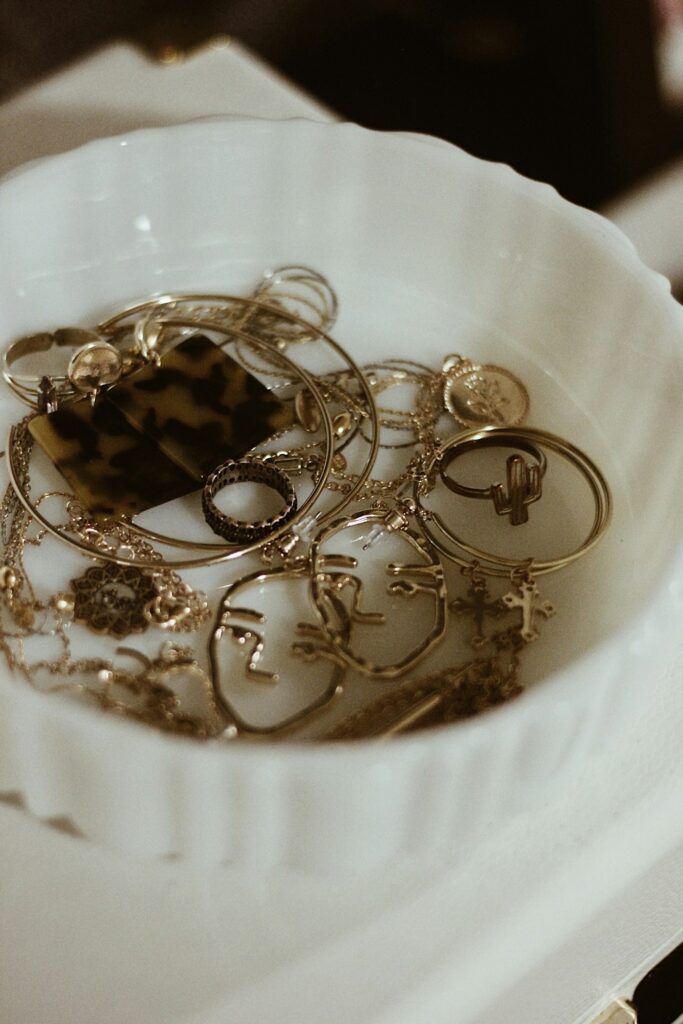
Every gold buyer who looks at your jewelry is doing the same quiet arithmetic: how much pure gold is in this pile, and what is that gold worth right now? If you can do that math yourself before you walk in, the conversation changes. You stop asking “What will you give me?” and start asking “How close to melt value is your offer, and why?”
The good news is that the math is not hard. It takes a scale, a calculator, a little patience with units, and an honest look at the stamps on your pieces. This guide walks through it step by step, using round example numbers so the method is clear. Plug in the actual spot price on the day you sell, because gold moves every trading day.
Step one: understand the troy ounce
Gold is priced per troy ounce, not the ounce on your kitchen scale. According to the Perth Mint, a troy ounce is 31.1034768 grams, while the everyday (avoirdupois) ounce is about 28.35 grams. The troy ounce is roughly 10 percent heavier.
That gap matters. If you weigh a bracelet on a kitchen scale set to ounces and then multiply by the per-troy-ounce gold price, you will overstate its gold content. The cleanest habit is to weigh everything in grams and convert at the end.
You may also hear jewelers and refiners use the pennyweight, abbreviated dwt. Twenty pennyweights make one troy ounce, so one pennyweight is about 1.555 grams. Some buyers quote prices per pennyweight, so it helps to know the conversion before you compare offers.
- 1 troy ounce = 31.1035 grams
- 1 troy ounce = 20 pennyweights
- 1 pennyweight = about 1.555 grams
- 1 kitchen (avoirdupois) ounce = about 28.35 grams
Step two: read the purity stamp
Pure gold is 24 karat. Jewelry is almost always an alloy, mixed with other metals for strength and color. The karat number tells you what share of the piece is gold, measured in 24ths. AARP’s guide to selling gold lists the common purities: 18K is 75 percent gold, 14K is 58.3 percent and 10K is 41.7 percent. Many pieces carry a three-digit fineness stamp instead, such as 417 for 10K, 585 for 14K or 750 for 18K, meaning parts per thousand.
A few cautions as you sort:
- Look for plating marks. Stamps that pair a karat with letters such as R.G.P. (rolled gold plate) or G.E.P. (gold electroplate) signal a thin layer of gold over another metal. Those pieces contain very little gold and are not valued like solid karat jewelry.
- Vintage pieces may have no stamp at all. AARP notes this is common. A buyer can test them, but do not assume either way.
- Sort by karat. Put 10K, 14K and 18K in separate bags. Mixed piles invite the buyer to price everything at the lowest purity.
Step three: weigh, then subtract what is not gold
A digital scale that reads to a tenth of a gram is fine for an estimate at home. Weigh each karat group separately and write the numbers down.
Then think about what is in that weight that is not gold alloy. AARP reports that buyers typically count small gems in the weight, while large stones may justify an appraisal and a resale instead of a scrap sale. Steel clasp springs, pearls, enamel and glass also add weight without adding gold. If a piece has a big stone, set it aside and treat it as a separate decision.
Step four: do the melt math
Here is the formula buyers use:
Melt value = weight in grams × purity × (spot price per troy ounce ÷ 31.1035)
Let’s walk an example with round, illustrative numbers. These are not a price quote. Suppose gold’s spot price is $4,000 per troy ounce, and you have a 14K bracelet that weighs 20 grams with no stones.
- Find the gold content: 20 grams × 0.583 = 11.66 grams of pure gold.
- Find the price per gram of pure gold: $4,000 ÷ 31.1035 = about $128.60 per gram.
- Multiply: 11.66 grams × $128.60 = about $1,499.
That $1,499 is the bracelet’s melt value, the theoretical value of its pure gold at that spot price. Swap in the real spot price on the day you sell and you have your own benchmark. If the same bracelet were 10K, the gold content would drop to about 8.34 grams and the melt value to about $1,072. Karat matters as much as weight.
Step five: understand why offers come in below melt
No buyer pays full melt value for scrap jewelry, and that is not automatically a sign of a bad actor. A buyer has to test the metal, send it to a refiner, wait to be paid, carry the price risk in between and keep the lights on. AARP reports that scrap jewelry and sterling bring lower offers than coins and bars because of refining costs, and that some dealers offer up to 98 percent of market price for pure gold coins and bars.
The useful question is how far below melt an offer falls. AARP quotes Stefan Gleason, CEO of MoneyMetals.com, who says an offer around half of the metal’s value is a bad deal. Use your melt number to measure every quote as a percentage:
- Offer ÷ melt value = payout percentage. If the bracelet above draws a $1,200 offer, that is about 80 percent of melt.
- Compare that percentage across buyers, not just the dollar figure, so you are judging the margin rather than the day’s price.
- Get quotes close together in time. AARP recommends at least three quotes, ideally on the same day, so the market price is the same for each.
Common mistakes that throw off the math
Most errors come from a few predictable places:
- Using kitchen ounces. Multiplying avoirdupois ounces by a troy-ounce price inflates the estimate by about 10 percent.
- Forgetting the purity step. Treating 14K as if it were pure gold overstates value by more than 70 percent.
- Using a stale price. Gold’s spot price changes throughout the trading day. A number you saw last week is not today’s benchmark.
- Counting stones as gold. A heavy cocktail ring may weigh a lot because of the setting and stones, not the metal.
- Ignoring collector value. Signed designer pieces and some antiques can be worth more than melt. AARP notes auction houses and online marketplaces may bring more for antique or designer pieces, though they take more time and sometimes a paid appraisal.
A one-page worksheet to bring with you
Before you visit a buyer, write this out on a single sheet:
- Each karat group and its weight in grams.
- Any pieces set aside for appraisal or resale, and why.
- The spot price you used and the time you checked it.
- Your melt-value estimate for each group.
- Columns for each buyer’s offer and the payout percentage it represents.
Ask each buyer to weigh your items in front of you, by karat group, on their scale. If their weight differs from yours, ask why. A good buyer will explain the testing they do and how they arrive at their number.
The same method works for silver
If your drawer also holds sterling, the formula does not change; only the purity and the price do. AARP notes that sterling silver is 92.5 percent pure, often stamped 925 or “sterling.” Weigh sterling in grams, multiply by 0.925, and multiply by the silver spot price divided by 31.1035. Keep silver-plated pieces out of the calculation entirely: AARP reports they usually have no scrap value, because the silver layer is so thin.
Run gold and silver as separate worksheets. Buyers price them separately, and mixing them makes it harder to tell which part of an offer is fair.
The bottom line
Melt value is not the price you will be paid. It is the yardstick that tells you whether the price you are offered is fair. Ten minutes with a scale and a calculator turns an anxious transaction into an informed one, and it is the single best protection a seller has.
This article is general education, not financial advice; talk to a licensed professional (a tax advisor, attorney or financial planner) about your own situation. Lumo is an information site and directory that connects people with gold buyers and dealers; Lumo does not buy or sell gold.
Sources: The Perth Mint; AARP; CFTC; 16 CFR 23.3 (Cornell LII)
Quick check
How much did you catch? Tap a question to see the answer.
1. How many grams are in one troy ounce?
Answer: About 31.1 grams (31.1034768 g), roughly 10 percent more than a kitchen ounce of about 28.35 grams.
2. What share of a 14K piece is gold?
Answer: About 58.3 percent. Many 14K pieces are stamped 585, meaning 585 parts per thousand.
3. Why compare offers as a percentage of melt value?
Answer: Because the percentage shows each buyer’s margin regardless of small moves in the spot price, so you can compare buyers fairly.